
milling cutter vs end mill
When choosing cutting tools for CNC machining, two terms appear frequently: milling cutter and end mill.
They are closely related, but they are not exactly the same.
In simple terms, a milling cutter is a broad category of rotary cutting tools used in milling operations, while an end mill is one specific type of milling cutter. The difference becomes important when selecting a tool for slotting, profiling, engraving, side cutting, surface machining, or precision CNC work.
This guide explains the difference between milling cutters and end mills, how they work, and how to choose the right tool for your machining application.
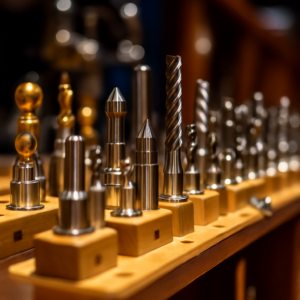
What Is a Milling Cutter?
A milling cutter is a rotating cutting tool used to remove material from a workpiece during milling.
Depending on its design, a milling cutter may cut with its peripheral edges, its end face, or both.
The term covers many different cutting tools, including:
- End mills
- Face mills
- Slot cutters
- Side-and-face cutters
- Ball nose cutters
- T-slot cutters
- Form cutters
- Engraving and routing cutters
Because of this, “milling cutter” describes a tool category rather than one specific cutter geometry.
Different milling cutters are designed for different operations, workpiece materials, cutting depths, spindle speeds, and surface-finish requirements.
If you want a broader introduction to the available tool types, you can also read our guide to types of milling cutters and how to choose the right cutter for CNC machining.
What Is an End Mill?
An end mill is a type of milling cutter designed to cut with both the sides of the tool and, in many designs, the cutting edges at its tip.
This makes end mills especially versatile.
They are commonly used for:
- Slot milling
- Pocket machining
- Contouring
- Profiling
- Side milling
- Plunge cutting
- Engraving
- General CNC machining
End mills are available in many diameters, flute configurations, cutting lengths, and geometries.
For small CNC routers and engraving applications, small-diameter cutters can be particularly useful when the machining task requires narrow cutting paths, detailed features, or precise material removal.
EverSource’s milling cutter range, for example, includes small cutting diameters from approximately 0.8 mm to 3.175 mm, with several models using a 3.175 mm shank and 38 mm overall length.
Milling Cutter vs End Mill: The Main Difference
The easiest way to understand the relationship is:
All end mills are milling cutters, but not all milling cutters are end mills.
“Milling cutter” is the wider category.
“End mill” describes a particular tool geometry within that category.
Here is a simple comparison:
| Feature | Milling Cutter | End Mill |
|---|---|---|
| Meaning | General category of milling tools | A specific type of milling cutter |
| Cutting position | Depends on cutter design | Usually side and end cutting |
| Typical operations | Face milling, slotting, profiling, forming, engraving and more | Slotting, profiling, pocketing, contouring and general CNC milling |
| Tool geometry | Many different designs | Cylindrical tool with flutes |
| Versatility | Depends heavily on cutter type | Generally very versatile |
| CNC use | Widely used | Extremely common |
This distinction matters because simply asking for a “milling cutter” may not provide enough information to select the correct tool.
The actual machining operation must be considered first.
When Should You Use an End Mill?
An end mill is often the better choice when the tool needs to move along several axes and remove material from both the side and bottom of a feature.
Typical examples include the following.
1. Slot Cutting
End mills are commonly used to create slots and channels in a workpiece.
Tool diameter should be selected according to the required slot width and machining tolerance.
For smaller machining features, using an appropriately sized cutter can help achieve more controlled cutting results.
2. Pocket Milling
When machining recessed areas or cavities, the cutter must remove material inside a defined boundary.
End mills are widely used because they can perform both side cutting and bottom cutting.
3. Profiling and Contouring
An end mill can follow the outer or inner profile of a workpiece.
This is common in CNC machining when producing shaped components or trimming material along a programmed path.
4. CNC Engraving and Fine Machining
Smaller cutters are useful when machining detailed features.
EverSource’s current milling cutter product range is positioned for CNC engraving and machining, with emphasis on cutting accuracy, concentricity and stable cutting performance.
The product page also lists applications involving CNC routers, engraving machines and machining centers.
When Would Another Milling Cutter Be Better Than an End Mill?
Although end mills are versatile, they are not automatically the best tool for every milling operation.
For example, a dedicated face milling cutter can be more suitable when the main objective is to machine a large flat surface efficiently.
Similarly, specialized cutters may be preferable for:
- T-slots
- Large surface machining
- Specific profiles
- Form cutting
- Special grooves
- High-volume production operations
The correct choice therefore depends on what material must be removed and how the tool must contact the workpiece.
How to Choose Between Milling Cutters and End Mills
Instead of focusing only on the tool name, evaluate the actual machining requirements.
1. Start With the Machining Operation
First determine what the cutter needs to do.
Ask:
- Are you cutting a slot?
- Machining a pocket?
- Engraving?
- Profiling an edge?
- Producing a flat surface?
- Creating a special shape?
For slotting, contouring and many general CNC machining operations, an end mill is often appropriate.
Specialized milling operations may require another cutter geometry.
2. Select the Correct Cutter Diameter
Cutter diameter affects both machining access and cutting stability.
A small diameter can reach narrow areas and produce detailed features, while a larger cutter may provide greater rigidity for heavier material removal.
EverSource’s current range includes multiple small cutting diameters such as approximately:
0.8 / 1.0 / 1.2 / 1.5 / 1.6 / 2.0 / 2.5 / 3.0 / 3.175 mm.
The correct size should be selected according to the machining feature rather than simply choosing the largest or smallest tool available.
For a more detailed explanation of cutter diameter, shank size and cutting length, see our Milling Cutter Size Guide.
3. Consider the Workpiece Material
The workpiece material affects tool geometry, cutting parameters and tool wear.
EverSource’s product page identifies applications including materials such as:
- Acrylic
- Plastic
- Carbon fiber
- MDF
- PCB materials
and describes the cutters as suitable for CNC routing, engraving and machining applications.
Different workpiece materials may require different cutting conditions even when the same general cutter type is used.
4. Check Cutter Sharpness and Concentricity
For precision CNC machining, the cutter must rotate accurately.
Poor concentricity can increase vibration, uneven cutting and tool wear.
The current EverSource milling cutter range emphasizes high concentricity, precision-ground cutting edges and stable cutting performance, with the aim of supporting cleaner cutting and consistent surface quality.
This becomes particularly important when using small-diameter tools, where cutting accuracy can be more sensitive to tool holding and spindle conditions.
5. Set an Appropriate Feed Rate
Choosing the correct cutter is only part of the process.
Feed rate also affects cutting performance.
If the feed is too aggressive for the cutter and material, cutting stability and surface quality can suffer. If cutting conditions are poorly matched to the tool, machining efficiency may also decrease.
The EverSource product page therefore specifically lists feed rate control as one of the important operating considerations.
6. Control the Depth of Cut
Depth of cut should match the cutter size, workpiece material and machining conditions.
Excessive cutting depth can place unnecessary load on a small cutter.
This is especially relevant for small CNC cutters used in PCB, engraving and precision machining applications.
EverSource’s product guidance similarly identifies depth of cut as a key parameter that should be controlled during machining.
Tool Holding Also Matters
Even a suitable milling cutter cannot perform properly if the tool is not held securely and concentrically.
For CNC machining applications, cutter diameter, shank size and collet compatibility should therefore be checked together.
EverSource’s milling cutter page, for example, lists multiple cutters with a 3.175 mm shank diameter and also recommends using milling cutters together with compatible ER collets for CNC machining.
Milling Cutter vs End Mill: Which One Should You Choose?
If you need a tool for common CNC operations such as:
- Slotting
- Pocketing
- Profiling
- Contouring
- Engraving
- Side cutting
an end mill is often one of the most practical choices.
If the operation involves large-area face machining, special grooves, unusual profiles or another specialized cutting task, a different type of milling cutter may be more appropriate.
Rather than selecting a cutter based only on its name, consider:
machining operation + workpiece material + cutter diameter + cutting depth + feed rate + tool holding.
These factors together determine whether a cutter is suitable for the job.
Frequently Asked Questions
Is an end mill the same as a milling cutter?
Not exactly. An end mill is one type of milling cutter. Milling cutter is the broader category that also includes face mills, slot cutters, form cutters and other specialized tools.
Can an end mill cut from the side?
Yes. Side cutting is one of the main reasons end mills are widely used for profiling, slotting and contouring applications.
Can an end mill cut downward?
Many end mills can perform end cutting, although the ability to plunge directly into material depends on the cutter geometry.
What size milling cutter should I choose?
The correct diameter depends on the feature size, workpiece material, cutting depth, machine capability and required accuracy. Small-diameter cutters are commonly used for detailed CNC routing and engraving work.
What is a 3.175 mm milling cutter?
3.175 mm is equivalent to approximately 1/8 inch. It is a common shank or cutting size in smaller CNC routers and engraving applications. EverSource’s current product range includes multiple cutters using a 3.175 mm shank.
Does the collet affect milling accuracy?
Yes. Tool holding and concentricity influence the stability of the rotating cutter. The cutter shank and collet therefore need to be correctly matched.
Choose the Right Milling Cutter for Your CNC Application
The main difference between a milling cutter and an end mill is simple:
milling cutter is the broader tool category, while an end mill is one of the most widely used cutter types within that category.
Choosing the correct cutter requires more than identifying the tool type. Cutter diameter, workpiece material, feed rate, cutting depth and tool holding should all be considered.
EverSource supplies precision milling cutters for CNC engraving and machining, including multiple small-diameter specifications for CNC routers, engraving machines and machining applications. The product range is designed around cutting accuracy, stability and practical CNC compatibility.