
milling cutter size guide
Choosing a milling cutter is not only about selecting the right cutter type.
If you are comparing terminology first, see our guide explaining the difference between a milling cutter and an end mill.
The size of the cutter also affects whether it can machine the required feature, fit the CNC tool holder, reach the necessary cutting depth and perform reliably in the intended application.
When reading a milling cutter specification table, four dimensions are especially important:
- Cutting diameter
- Cutting length
- Shank diameter
- Overall length
Understanding these dimensions makes it much easier to compare milling cutter sizes and select a suitable tool for CNC routing, engraving and precision machining.
This guide explains each dimension and uses actual milling cutter specifications to show how different sizes compare.
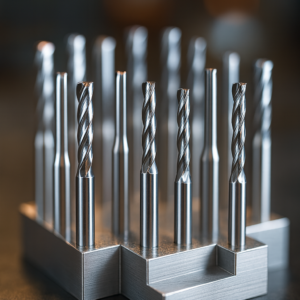
What Do Milling Cutter Size Specifications Mean?
A milling cutter specification may look simple, but each dimension describes a different part of the tool.
For the milling cutters in EverSource’s current range, the technical specification table uses four main dimensions:
d = cutting diameter
h = cutting length
D = shank diameter
L = overall length
The available products range from approximately 0.8 mm to 3.175 mm in cutting diameter, while the listed models use a 3.175 mm shank diameter and 38 mm overall length.
Let’s look at each dimension in more detail.
1. Cutting Diameter
The cutting diameter is the diameter of the active cutting portion of the milling cutter.
It is one of the most important dimensions because it determines how large or small a feature the cutter can machine.
For example:
- A 0.8 mm cutter can enter much narrower areas than a 3.175 mm cutter.
- A 1.0 mm or 1.2 mm cutter may be useful where relatively fine machining is required.
- Larger diameters such as 2.5 mm, 3.0 mm or 3.175 mm provide a wider cutting path.
EverSource currently lists the following cutting diameters:
| Cutter Type | Cutting Diameter d | Cutting Length h | Shank Diameter D | Overall Length L |
|---|---|---|---|---|
| 0.8 × 5.5 | 0.8 mm | 5.5 mm | 3.175 mm | 38 mm |
| 1.0 × 7.5 | 1.0 mm | 7.5 mm | 3.175 mm | 38 mm |
| 1.2 × 8.0 | 1.2 mm | 8.0 mm | 3.175 mm | 38 mm |
| 1.5 × 8.5 | 1.5 mm | 8.5 mm | 3.175 mm | 38 mm |
| 1.6 × 9.0 | 1.6 mm | 9.0 mm | 3.175 mm | 38 mm |
| 2.0 × 9.5 | 2.0 mm | 9.5 mm | 3.175 mm | 38 mm |
| 2.5 × 10.5 | 2.5 mm | 10.5 mm | 3.175 mm | 38 mm |
| 3.0 × 12.0 | 3.0 mm | 12.0 mm | 3.175 mm | 38 mm |
| 3.175 × 12.0 | 3.175 mm | 12.0 mm | 3.175 mm | 38 mm |
These are the dimensions listed in the current product specifications.
2. How Does Milling Cutter Diameter Affect Machining?
Different milling cutter diameters are suited to different machining requirements.
Smaller Diameter Cutters
Small-diameter cutters are useful when the machining task requires:
- Narrow cutting paths
- Small features
- Fine engraving
- Detailed routing
- Precision work
For example, cutters in the 0.8–1.5 mm range provide a much smaller cutting width than 3 mm-class cutters.
This can be useful when machining detailed geometries where a larger cutter physically cannot enter the required area.
However, cutter diameter should not be considered alone.
The workpiece material, machining depth, feed rate and tool holding conditions also matter.
EverSource’s product page specifically identifies cutter selection, feed rate and depth of cut as important factors affecting machining performance.
Larger Diameter Cutters
Larger cutters such as:
- 2.0 mm
- 2.5 mm
- 3.0 mm
- 3.175 mm
produce a wider cutting path.
They may be more suitable when extremely fine feature access is not required.
The correct size therefore depends primarily on the geometry of the feature being machined.
A good general principle is to select a cutter that is small enough to produce the required geometry without unnecessarily choosing an extremely small diameter.
3. What Is Milling Cutter Shank Size?
The shank is the part of the milling cutter held by the spindle, collet or other tool-holding system.
This means that cutting diameter and shank diameter are not necessarily the same.
For example, EverSource lists:
- 0.8 mm cutting diameter × 3.175 mm shank
- 1.0 mm cutting diameter × 3.175 mm shank
- 2.0 mm cutting diameter × 3.175 mm shank
- 3.0 mm cutting diameter × 3.175 mm shank
Across the listed size range, the shank diameter remains 3.175 mm.
This allows different cutting diameters to use the same nominal shank size.
4. What Is a 3.175 mm Shank?
A 3.175 mm shank is approximately equivalent to 1/8 inch.
This size is commonly associated with smaller CNC routing and engraving setups.
On the EverSource product page, the cutters are positioned for use with equipment including:
- CNC routers
- Engraving machines
- Machining centers
and for machining materials such as acrylic, plastic, carbon fiber, MDF and PCB-related materials.
Before ordering a cutter, however, always confirm that the machine’s tool-holding system supports the required shank diameter.
5. Why Shank Diameter Must Match the Collet
The milling cutter and the tool holder work together as one system.
If a cutter uses a 3.175 mm shank, the collet or other holding device must be compatible with that shank size.
Incorrect tool holding can negatively affect:
- Tool stability
- Concentricity
- Machining accuracy
- Surface quality
The EverSource milling cutter page therefore also links milling cutters with compatible ER collets for CNC machining.
6. What Is Cutting Length?
Cutting length is the length of the active cutting portion of the cutter.
In the EverSource specification table, cutting length increases as cutter diameter increases.
Examples include:
- 0.8 mm diameter → 5.5 mm cutting length
- 1.0 mm diameter → 7.5 mm cutting length
- 1.5 mm diameter → 8.5 mm cutting length
- 2.0 mm diameter → 9.5 mm cutting length
- 2.5 mm diameter → 10.5 mm cutting length
- 3.0 mm diameter → 12 mm cutting length
- 3.175 mm diameter → 12 mm cutting length
Cutting length should not be confused with overall tool length.
It represents only the portion intended for cutting engagement.
7. Cutting Length vs Depth of Cut
A common mistake is to assume that a cutter’s cutting length automatically means that the tool should cut to that full depth in one pass.
These are two different concepts.
Cutting length is a physical tool dimension.
Depth of cut is a machining parameter.
The EverSource product page specifically lists depth of cut as something that should be controlled during machining.
Actual cutting depth depends on factors such as:
- Cutter size
- Workpiece material
- Machine conditions
- Feed rate
- Cutting operation
Therefore, the cutting length tells you how much cutting edge is available, but it does not by itself determine the correct machining depth.
8. What Is Overall Length?
Overall length is the total length of the milling cutter from one end to the other.
All the listed EverSource cutter sizes have an overall length of:
38 mm
despite differences in cutting diameter and cutting length.
Overall length matters because the tool must fit properly within the machine and tool-holding arrangement.
It also helps buyers compare cutters that may have similar cutting diameters but different physical proportions.
9. Milling Cutter Size Examples
Here are several examples from the available specifications.
0.8 × 5.5 mm Cutter
Specifications:
- Cutting diameter: 0.8 mm
- Cutting length: 5.5 mm
- Shank diameter: 3.175 mm
- Overall length: 38 mm
This is the smallest cutting diameter in the listed range.
Its small diameter makes it relevant where a relatively narrow cutting path or fine feature access is required.
1.5 × 8.5 mm Cutter
Specifications:
- Cutting diameter: 1.5 mm
- Cutting length: 8.5 mm
- Shank diameter: 3.175 mm
- Overall length: 38 mm
This sits around the middle of the smaller cutter range and provides a larger cutting diameter than 0.8–1.2 mm models while retaining the same shank size.
2.5 × 10.5 mm Cutter
Specifications:
- Cutting diameter: 2.5 mm
- Cutting length: 10.5 mm
- Shank diameter: 3.175 mm
- Overall length: 38 mm
Compared with the smaller cutters, this model offers both a larger cutting diameter and longer cutting section.
3.175 × 12 mm Cutter
Specifications:
- Cutting diameter: 3.175 mm
- Cutting length: 12 mm
- Shank diameter: 3.175 mm
- Overall length: 38 mm
In this model, the cutting diameter and shank diameter are both 3.175 mm.
It represents the largest cutting diameter listed in this product range.
10. How to Choose the Right Milling Cutter Size
When comparing milling cutter sizes, consider the following factors together.
Step 1: Check the Required Feature Size
Start with the smallest slot, channel or detail that needs to be machined.
The cutter must physically fit the required geometry.
For very small details, a large cutter may simply be unable to enter the machining area.
Step 2: Choose a Suitable Cutting Diameter
Once the geometry is known, select an appropriate cutting diameter.
Do not select a cutter only because it is the smallest size available.
The cutter should suit the actual machining requirement.
Step 3: Check the Cutting Length
Make sure the cutting portion is long enough for the intended feature.
The available EverSource range provides cutting lengths from approximately 5.5 mm to 12 mm.
Step 4: Confirm the Shank Size
The cutter shank must match the machine’s tool holder.
The current listed cutter range uses a 3.175 mm shank.
If an ER collet is being used, confirm the correct collet size before machining.
Step 5: Consider the Material
EverSource’s cutters are presented for CNC machining applications involving materials such as:
- Acrylic
- Plastic
- Carbon fiber
- MDF
- PCB materials
The material should therefore be considered together with cutter size and machining parameters.
Step 6: Adjust Feed Rate and Depth of Cut
Selecting the correct tool size is only part of cutter setup.
Feed rate and depth of cut must also be appropriate for the machining conditions.
The EverSource product page highlights both parameters as important operational considerations.
Cutter size is only one part of tool selection. For a broader overview, see our guide to the different types of milling cutters and how to choose the right cutter for CNC machining.
Milling Cutter Size Selection by Application
The table below provides a practical way to think about the available size range.
| Application Requirement | Cutter Size Consideration |
|---|---|
| Fine engraving | Smaller cutting diameter |
| Narrow grooves | Cutter diameter must fit groove width |
| PCB-related machining | Small diameter may be required for detailed features |
| CNC routing | Select diameter based on feature width and material |
| Deeper features | Check available cutting length |
| Tool-holder compatibility | Confirm 3.175 mm shank compatibility |
The exact cutter should still be selected based on the actual workpiece and machine setup.
Common Milling Cutter Size Mistakes
Mistake 1: Confusing Cutting Diameter With Shank Diameter
A 1 mm cutter does not necessarily have a 1 mm shank.
In the current EverSource range, a 1.0 mm cutting diameter cutter still uses a 3.175 mm shank.
Always check both dimensions separately.
Mistake 2: Looking Only at Cutter Diameter
Two tools may have similar cutting diameters but different:
- Cutting lengths
- Shank sizes
- Overall lengths
A complete specification should be reviewed before purchase.
Mistake 3: Assuming Cutting Length Equals Recommended Cutting Depth
Cutting length is a tool dimension.
Depth of cut is a machining setting.
They should not be treated as the same thing.
Mistake 4: Ignoring Tool-Holder Compatibility
A cutter cannot be properly used unless its shank is compatible with the spindle or collet.
Check the shank dimension before selecting the tool.
Milling Cutter Size Guide FAQ
What are common small milling cutter sizes?
EverSource’s current listed range includes cutting diameters of approximately 0.8, 1.0, 1.2, 1.5, 1.6, 2.0, 2.5, 3.0 and 3.175 mm.
What does 3.175 mm mean on a milling cutter?
3.175 mm is approximately equal to 1/8 inch.
It may refer to the shank diameter, cutting diameter or both, depending on the tool specification.
In EverSource’s listed range, all shown cutters use a 3.175 mm shank, while only the largest listed model also has a 3.175 mm cutting diameter.
Is cutting diameter the same as shank diameter?
No.
The cutting diameter describes the cutting portion of the tool.
The shank diameter describes the portion held by the tool holder.
For example, a cutter may have a 1.0 mm cutting diameter but a 3.175 mm shank.
What is the cutting length of a milling cutter?
Cutting length is the length of the cutter’s active cutting section.
In the current EverSource range, listed cutting lengths range from approximately 5.5 mm to 12 mm.
How do I choose milling cutter diameter?
Start with the required machining feature size.
Then consider cutting depth, workpiece material, feed conditions and tool-holder compatibility.
The cutter needs to be small enough to machine the required geometry while remaining appropriate for the overall machining operation.
Does milling cutter size affect surface finish?
Cutter size is one factor, but surface finish also depends on cutting conditions and tool performance.
EverSource’s product page emphasizes cutter sharpness, concentricity and stable cutting performance as factors associated with clean and consistent machining results.
Find the Right Milling Cutter Size for Your CNC Application
Understanding milling cutter dimensions makes tool selection much easier.
When reading a cutter specification, pay attention to:
Cutting Diameter → Cutting Length → Shank Diameter → Overall Length
For EverSource’s current small CNC milling cutter range, cutting diameters extend from approximately 0.8 mm to 3.175 mm, with cutting lengths from 5.5 mm to 12 mm, a common 3.175 mm shank diameter, and 38 mm overall length.
The range is designed for CNC routing, engraving and machining applications, including work involving acrylic, plastic, carbon fiber, MDF and PCB-related materials.