
Selecting the right CNC router bit is essential for achieving accurate cuts, consistent surface quality, and efficient machining. However, a router bit that performs well in wood may not be suitable for acrylic, engineering plastics, or printed circuit boards (PCBs).
Different materials create different cutting challenges. Wood can experience fiber tear-out, acrylic is sensitive to heat, certain plastics may deform during machining, and PCB substrates can cause rapid cutting-edge wear.
For CNC workshops, industrial manufacturers, and cutting tool distributors, understanding these differences is an important part of selecting the correct cutting tool.
At Ever Source, our CNC cutting tool range includes carbide fishtail router bits in multiple diameter and length configurations for precision routing applications.
This guide explains how to choose a CNC router bit based on workpiece material, cutting geometry, tool dimensions, and machining requirements.
1. Why Does Workpiece Material Matter When Choosing a CNC Router Bit?
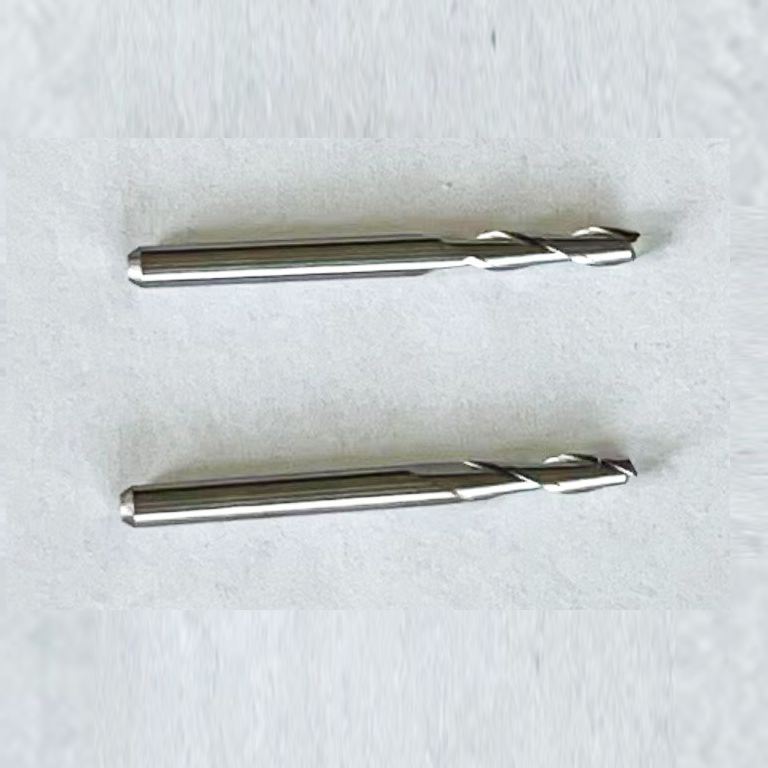
The material being machined directly affects cutting forces, chip formation, heat generation, and surface finish.
For example, wood-based panels can produce fibers and dust during cutting, while acrylic may form chips that soften or adhere to the cutting edge if machining temperatures become excessive.
PCB materials containing fiberglass reinforcement introduce additional abrasive wear considerations.
Because of these differences, selecting a router bit based only on its cutting diameter is not sufficient.
Industrial buyers should evaluate several factors:
- Workpiece material and hardness
- Cutting-edge geometry
- Flute direction and flute count
- Cutting diameter and cutting length
- Required surface finish
- CNC spindle and machine capabilities
- Cutting depth and chip evacuation
The correct combination helps improve machining consistency and reduces the risk of poor edge quality or premature tool damage.
2. How to Choose a CNC Router Bit for Wood
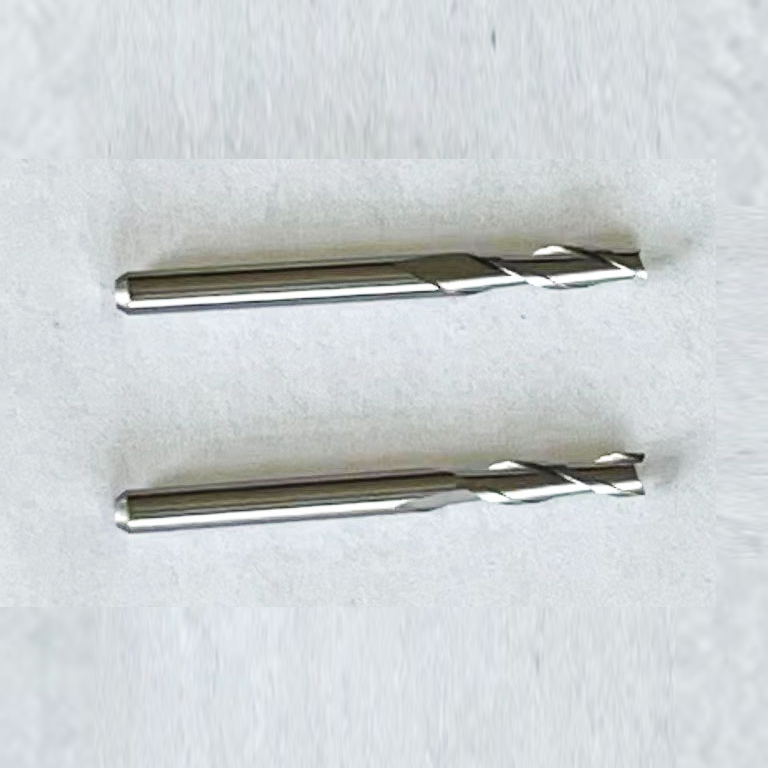
Wood is one of the most common materials processed using CNC routers.
However, solid wood, plywood, MDF, and laminated panels have different machining characteristics.
Solid Wood
Solid wood contains natural grain structures that can influence cutting quality.
During routing, cutting direction relative to the wood grain may affect tear-out and surface finish.
For general woodworking applications, carbide router bits are widely used because of their hardness and wear resistance.
Upcut spiral router bits can provide effective chip evacuation, while downcut configurations may help reduce top-surface fiber lifting.
For detailed contouring or engraving, appropriately designed small-diameter cutting tools may be considered.
Plywood and Laminated Panels
Plywood and laminated materials are particularly sensitive to surface chipping.
When the visible top surface requires a clean finish, downcut router bits are often preferred.
For through-cutting operations where both faces must remain clean, compression router bits may provide better results.
The choice depends on material thickness, cutting depth, and the required edge quality.
MDF
Medium-density fiberboard is widely used in furniture manufacturing and CNC panel processing.
MDF machining produces fine dust and requires effective dust extraction.
Tool sharpness, cutting geometry, and feed rate influence the quality of the machined edge.
For detailed MDF engraving or profiling, smaller cutting diameters may be useful, although machine rigidity and tool deflection must also be considered.
Recommended Considerations for Woodworking
| Material | Main Challenge | Tool Selection Consideration |
|---|---|---|
| Solid wood | Grain-related tear-out | Suitable flute direction and sharp cutting edges |
| Plywood | Surface chipping | Downcut or compression geometry |
| MDF | Fine dust and edge quality | Carbide tooling and effective extraction |
| Laminated panels | Top and bottom surface finish | Downcut or compression router bits |
A fishtail router bit may be considered for specific woodworking contouring and precision routing applications when its geometry is suitable for the material.
3. How to Choose a CNC Router Bit for Acrylic
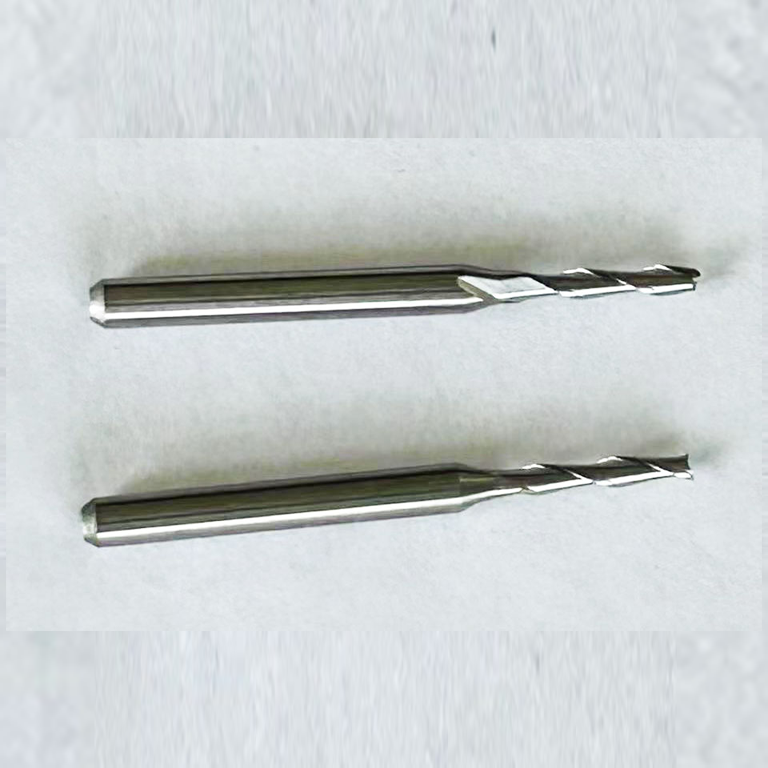
Acrylic machining requires careful control of cutting temperature and chip evacuation.
Unlike wood, acrylic is a thermoplastic material. Excessive heat during cutting can soften the material and cause melting, chip adhesion, or poor edge quality.
The type of acrylic also matters.
Cast acrylic and extruded acrylic may respond differently to machining conditions.
Choose Suitable Flute Geometry
For many acrylic routing applications, a polished single-flute or O-flute router bit is commonly considered because it can provide effective chip clearance and reduce friction when correctly operated.
An upcut spiral configuration may also be suitable where upward chip evacuation is beneficial.
A fishtail router bit can be considered for acrylic cutting if its specific flute geometry and cutting-edge design are compatible with the material.
However, not every fishtail router bit is optimized for acrylic.
Control Heat Generation
Heat buildup can occur when chips are not removed effectively or when the tool rubs against the workpiece rather than cutting efficiently.
To reduce this risk:
- Use a sharp cutting tool.
- Select appropriate spindle speed and feed rate.
- Avoid excessive tool engagement.
- Maintain effective chip evacuation.
- Use suitable workholding to prevent vibration.
Actual machining parameters should be established according to the tool manufacturer’s recommendations and verified through controlled cutting trials.
Consider Edge-Finish Requirements
Acrylic components may require different edge qualities depending on the application.
For example, display panels, protective covers, and transparent components may require smoother edges than general industrial plastic parts.
Router bit geometry influences the machined surface, but additional finishing processes may still be necessary when optical-quality edges are required.
What Should Buyers Specify?
When purchasing a CNC router bit for acrylic, provide:
- Cast or extruded acrylic
- Material thickness
- Required cutting diameter
- Cutting depth
- Edge-finish requirements
- CNC spindle specifications
This information helps suppliers recommend a more appropriate tool configuration.
4. How to Choose a CNC Router Bit for PVC, ABS and Other Plastics
Engineering plastics are widely used in industrial components, equipment housings, signage, and precision-machined parts.
However, different plastics have different thermal and mechanical properties.
A router bit suitable for one plastic may not perform equally well in another.
PVC
PVC can be machined using suitable carbide cutting tools.
However, cutting conditions must be controlled to prevent excessive heat, material softening, and poor chip formation.
Appropriate dust and fume control is also important, particularly when machining conditions could cause thermal degradation.
ABS
ABS is commonly used for equipment housings and manufactured plastic components.
During CNC routing, excessive heat or unsuitable cutting parameters may cause burrs, deformation, or material buildup on the cutting edge.
Sharp tools with suitable chip clearance are important for maintaining cutting quality.
Other Engineering Plastics
Materials such as POM, nylon, and polycarbonate have different machining characteristics.
For example, some materials may produce continuous chips, while others are more sensitive to heat or dimensional changes.
Tool selection should therefore consider the exact polymer grade rather than treating all plastics as one material category.
Plastic Router Bit Selection Guide
| Material | Common Machining Concern | Recommended Consideration |
|---|---|---|
| PVC | Heat buildup and edge quality | Sharp tool, controlled temperature and suitable extraction |
| ABS | Burr formation and melting | Efficient chip removal and suitable cutting parameters |
| POM | Dimensional accuracy | Stable workholding and appropriate tool geometry |
| Nylon | Material flexibility and chip formation | Sharp edges and controlled cutting conditions |
| Polycarbonate | Heat sensitivity and surface quality | Appropriate cutting speed, chip clearance and tool sharpness |
For industrial plastic machining, material compatibility should always be confirmed before selecting a production tool.
5. How to Choose a CNC Router Bit for PCB Machining
Printed circuit board routing requires precision, dimensional stability, and resistance to abrasive wear.
Many PCB substrates contain fiberglass reinforcement, which can accelerate cutting-edge wear.
For this reason, PCB machining commonly uses specialized solid carbide routing tools.
Cutting Diameter
PCB profiling often involves narrow cutting paths and small features.
Small-diameter tools can provide the required cutting width, but they are also more susceptible to deflection and breakage.
The correct diameter depends on board thickness, required profile accuracy, and machining conditions.
Carbide Tool Material
Solid carbide is widely used in PCB routing because of its hardness and wear resistance.
However, carbide grade, cutting-edge geometry, and tool design also influence performance.
Not every general-purpose carbide router bit is suitable for fiberglass-reinforced PCB substrates.
Spindle Runout and Machine Accuracy
Small-diameter PCB routing tools are particularly sensitive to spindle runout.
Excessive runout can increase cutting forces, reduce dimensional accuracy, and shorten tool life.
Industrial users should ensure that the spindle, collet, and tool-holding system are suitable for precision machining.
Dust Extraction
PCB routing can generate fine dust containing fiberglass and resin particles.
Suitable dust extraction and appropriate occupational safety controls are important during machining.
Can Fishtail Router Bits Be Used for PCB Cutting?
Certain fishtail router bit configurations may be suitable for PCB profiling when specifically designed and approved for the application.
However, buyers should confirm compatibility with the actual PCB substrate and machining conditions.
Dedicated PCB routing tools may be preferable for demanding fiberglass-reinforced materials.
6. How to Choose the Right Router Bit Diameter and Length
Suggested image: Insert Ever Source’s actual technical drawing showing cutting diameter (d), shank diameter (D), cutting length (h), and overall length (L).
After selecting the appropriate cutting geometry, buyers must confirm the tool dimensions.
Ever Source’s fishtail router bit product page displays multiple size configurations, with cutting diameters ranging from approximately 0.8 mm to 3.175 mm.
These dimensions can support different precision routing requirements.
Cutting Diameter (d)
Cutting diameter determines the nominal width of the cutting path.
Smaller diameters are suitable for narrow slots and detailed features.
Larger diameters may provide greater rigidity and allow wider cutting paths.
Shank Diameter (D)
The shank diameter must match the CNC spindle collet or tool-holding system.
Incorrect matching can lead to clamping problems, excessive runout, and machining instability.
Cutting Length (h)
Cutting length should be sufficient for the required machining depth.
However, unnecessarily long cutting lengths may reduce rigidity and increase vibration.
Overall Length (L)
Overall length determines the tool’s total physical length and influences available reach.
The selected length should provide sufficient clearance while minimizing unnecessary overhang.
Why Tool Rigidity Matters
Small-diameter tools are especially sensitive to bending forces.
A longer tool projection can increase deflection, potentially affecting cutting accuracy and tool life.
For precision CNC routing, the shortest practical tool setup is generally preferable.
Beyond cutting diameter and tool length, the geometry of the cutting tip also affects tool selection. To better understand these characteristics, read our guide to fishtail router bit design and applications, covering cutting-edge geometry, precision routing, and common CNC machining uses.
7. CNC Router Bit Selection by Material: Comparison Table
The following table provides a practical starting point for selecting CNC router bits.
| Material | Common Tool Options | Key Selection Priority |
|---|---|---|
| Solid wood | Carbide spiral, suitable fishtail | Grain tear-out and cutting accuracy |
| Plywood | Downcut, compression | Surface chipping |
| MDF | Carbide spiral, suitable profiling tools | Dust extraction and edge quality |
| Acrylic | Polished O-flute, suitable spiral or fishtail | Heat control and chip evacuation |
| PVC | Plastic-specific carbide router bit | Temperature control and chip removal |
| ABS | Sharp carbide router bit | Burr reduction and dimensional accuracy |
| PCB | Dedicated carbide PCB router | Wear resistance and precision |
This table is intended as general selection guidance.
The final tool choice should be based on the exact material, machining operation, and manufacturer’s specifications.
Material compatibility is only one part of choosing the right cutting tool. Flute direction and cutting-edge geometry also influence chip evacuation and surface finish. For a more detailed comparison, explore our guide to fishtail vs upcut vs downcut router bits and learn how these designs differ in CNC machining applications.
8. Common Mistakes When Selecting CNC Router Bits
Choosing an unsuitable router bit can lead to poor cutting results, unnecessary tool wear, or production interruptions.
Some common mistakes include:
Selecting a Tool Based Only on Diameter
Two router bits with the same cutting diameter may have different flute geometries, cutting-edge designs, and material compatibility.
Always review the complete tool specification.
Ignoring Chip Evacuation
Poor chip removal can cause heat buildup and chip recutting.
This is particularly important in acrylic and plastic machining.
Using Excessive Cutting Length
A longer cutting tool is not always better.
Excessive overhang can reduce rigidity and increase vibration.
Assuming All Carbide Tools Perform the Same
Carbide grade, cutting-edge preparation, flute geometry, and manufacturing quality all influence tool performance.
Using General-Purpose Tools for Specialized Materials
PCB substrates, certain engineering plastics, and laminated panels may require dedicated cutting geometries.
Using an unsuitable tool can reduce machining quality and increase production costs.
9. Ever Source CNC Router Bits for Industrial Applications
Ever Source supplies CNC cutting tools for industrial machining applications, including carbide fishtail router bits.
Our fishtail router bit product range includes multiple cutting diameters and length configurations for precision routing requirements.
The product page provides technical drawings, dimensional specifications, actual product photographs, and information about Ever Source’s production facilities and quality assurance.
These resources help industrial buyers review available tool configurations before making a purchasing decision.
When selecting a router bit, we recommend providing the following information:
- Workpiece material and grade
- Required cutting diameter
- Cutting depth
- Shank diameter
- CNC machine and spindle specifications
- Required surface finish
- Expected machining operation
For detailed specifications, visit our Fishtail Router Bit product page.
You can also contact Ever Source to discuss the appropriate cutting tool configuration for your CNC application.
Frequently Asked Questions
What is the best CNC router bit for acrylic?
A polished single-flute or O-flute router bit is commonly considered for acrylic machining because it can provide effective chip evacuation under suitable cutting conditions. Other configurations may also work depending on the acrylic type and machining requirements.
Can the same router bit cut wood and plastic?
Some carbide router bits can machine both materials, but this does not mean they are equally suitable for every application. Flute geometry, cutting parameters, and edge-quality requirements should be evaluated separately.
What router bit should I use for plywood?
Downcut router bits are often selected for clean top surfaces, while compression router bits may be preferable when both top and bottom edges require reduced chipping.
Are fishtail router bits suitable for precision CNC cutting?
Yes, appropriately designed fishtail router bits can be used for precision routing and contour machining. Their suitability depends on the specific tool geometry, workpiece material, and machining conditions.
What size router bit should I choose?
Choose the cutting diameter according to the required feature width, cutting depth, workpiece material, and tool rigidity. Also verify shank compatibility and overall tool length.
Can carbide router bits machine PCB materials?
Yes, specialized carbide router bits are widely used for PCB profiling. However, abrasive fiberglass-reinforced substrates may require dedicated PCB cutting tools rather than general-purpose router bits.
Conclusion
Choosing the right CNC router bit requires more than selecting a cutting diameter.
Wood, acrylic, engineering plastics, and PCB materials have different machining characteristics that affect tool geometry, chip evacuation, surface quality, and wear resistance.
For industrial buyers, the most effective approach is to evaluate the workpiece material, machining operation, cutting dimensions, and machine compatibility together.
Ever Source provides carbide fishtail router bits in multiple size configurations for precision CNC routing applications.
Explore our Fishtail Router Bit range to review available specifications and discuss your cutting requirements with our team.